Notice
If you are searching for missing figures (Fig. 2) or examples of execution, please click this hyperlink [Figures and Explanation].
Background
In robot path planning, the size of map is important factor to measure the performance of path planning algorithm.
We hope that it would be helpful for researchers who need large and realistic maps for robot path planning experiments. If you want to employ these maps for your research, please cite below reference.
Jaesung Lee, and Dae-Won Kim, “An Effective Initialization Method for Genetic Algorithm-based Robot Path Planning using a Directed Acyclic Graph,” Information Sciences, Vol. 332, No. 1, pp. 1-18, 1 September 2016.
Corresponding Bibtex Code:
@article{lee2016effective,
title={An Effective Initialization Method for Genetic Algorithm-based Robot Path Planning using a Directed Acyclic Graph},
author={Lee, Jaesung and Kim, Dae-Won},
journal={Information Sciences},
volume={332},
number={1},
pages={1-18},
year={2016},
publisher={Elsevier}
}
Description
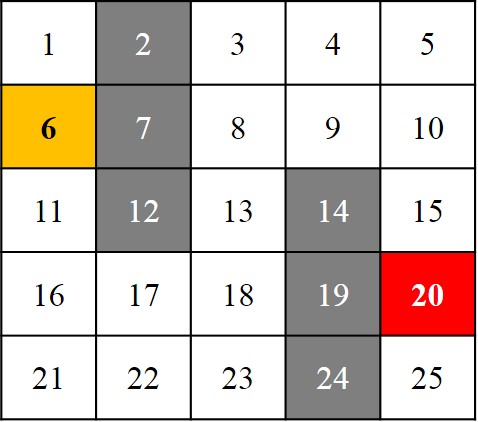
Each map is delivered by MATLAB .mat file containing sp, dp, and map variables. The variables sp and dp indicates the index of starting and destination nodes, and map is a 2-dimensional binary array. In map variable, the obstacle node is represented as 1 (true) and free-space node is represented as 0 (false), respectively.
 |
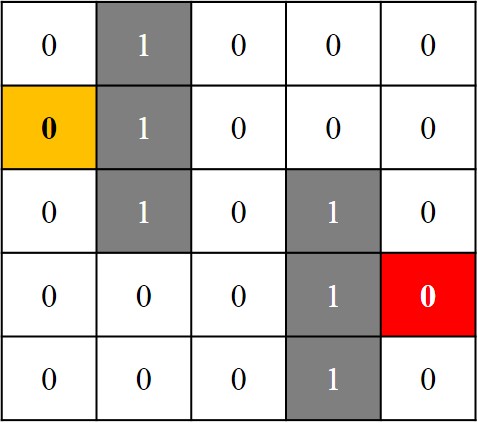 |
| (a) Index of each node | (b) Corresponding map variable |
Figure (a) shows the index of each node in our proposed method. The nodes with yellow and red color indicates the starting and destination node, respectively. In this case, the value of variable sp is 6 and the value of variable dp is 20. According to Figure (a), the variable map will be like Figure (b).
Caves – 20 Artificial Maps
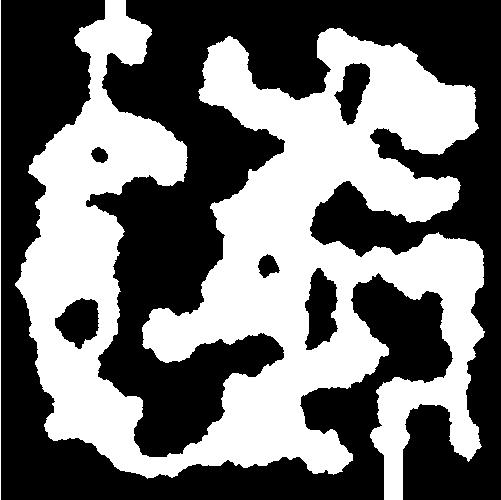
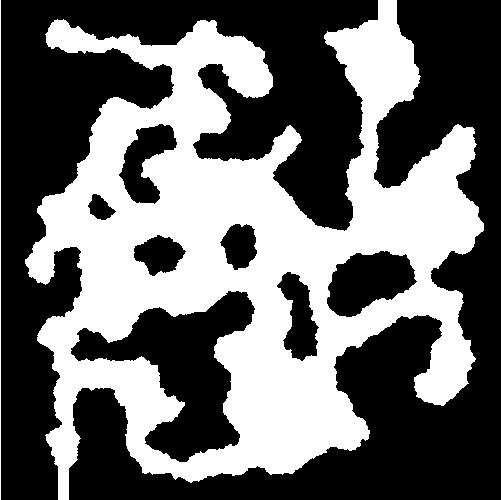
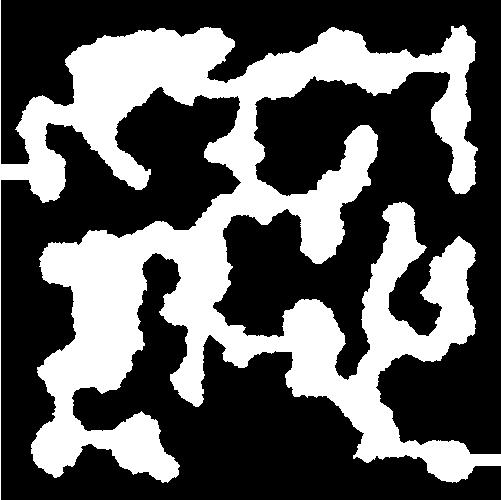
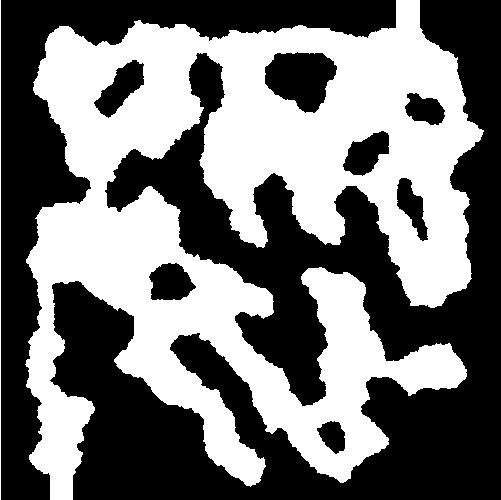
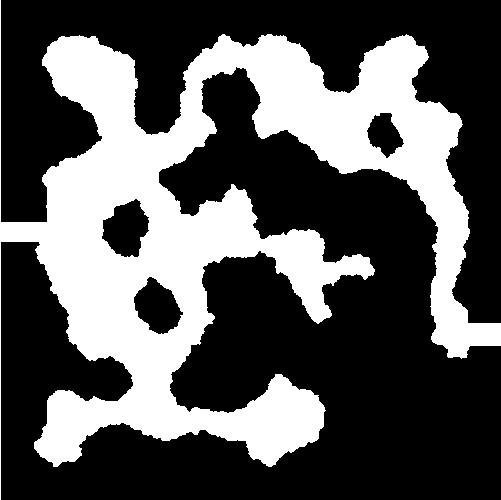
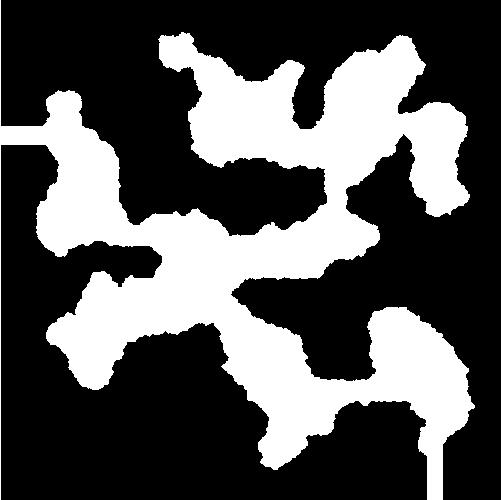
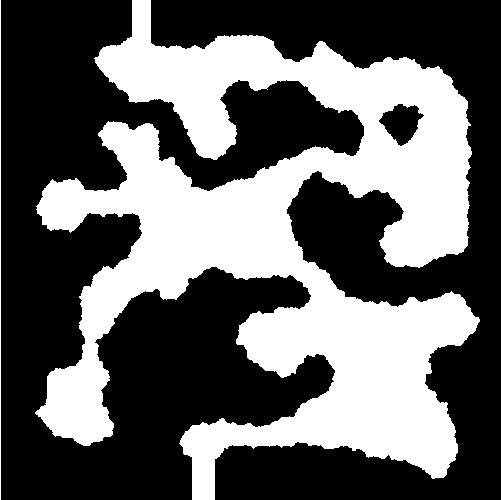
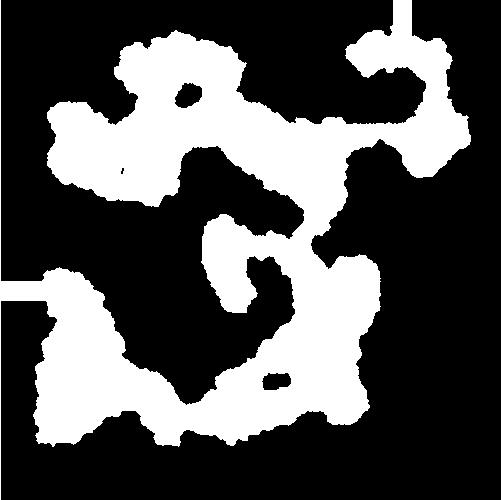
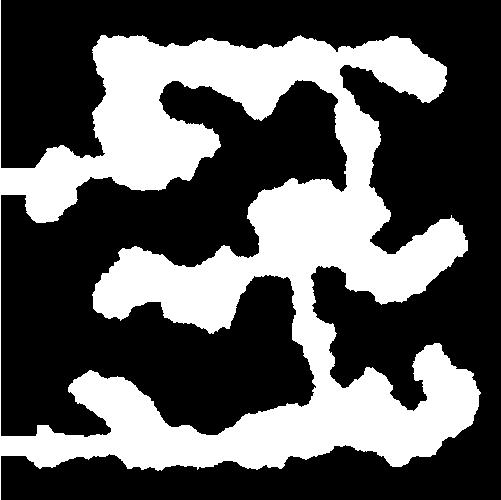
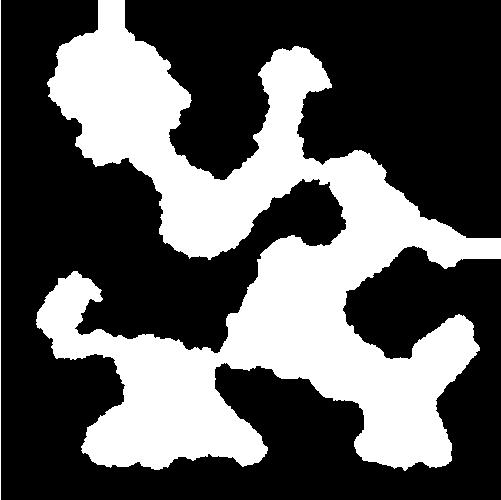
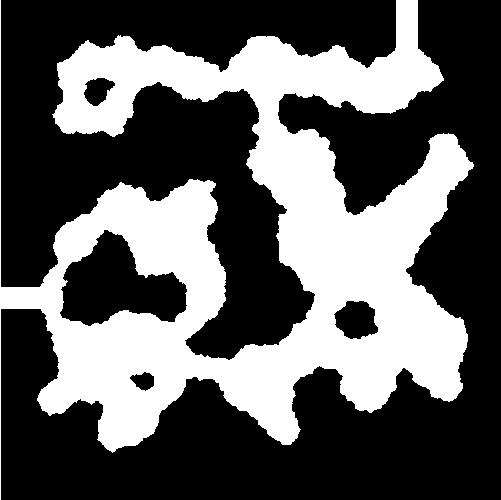
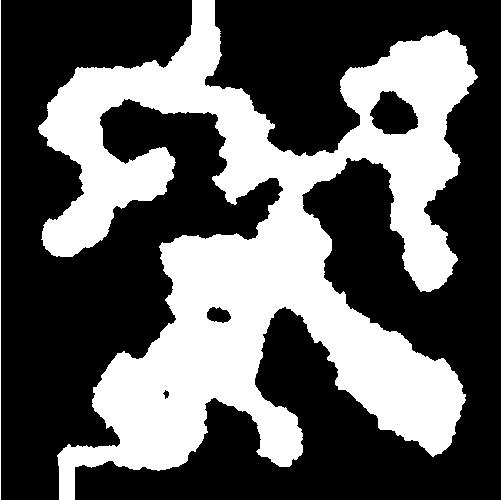
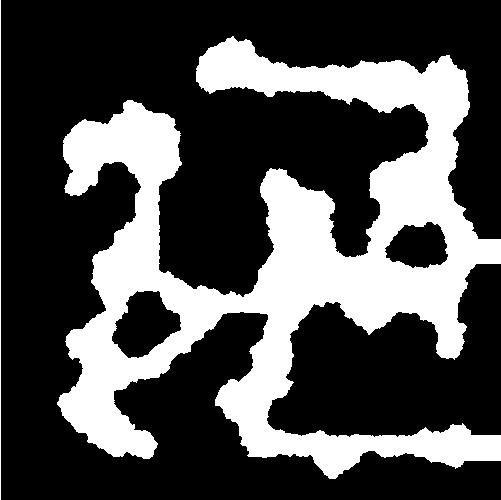
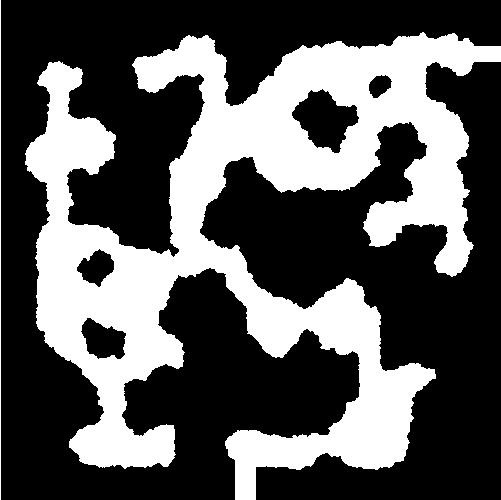
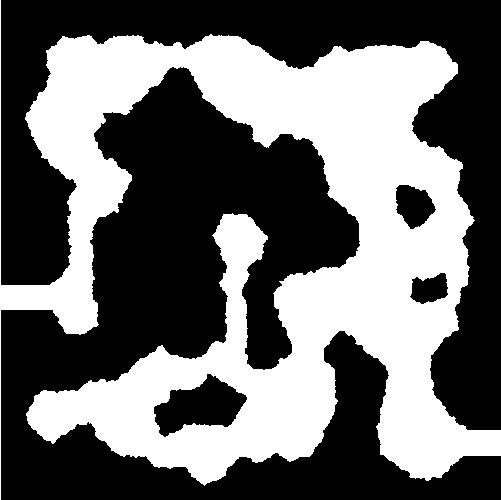
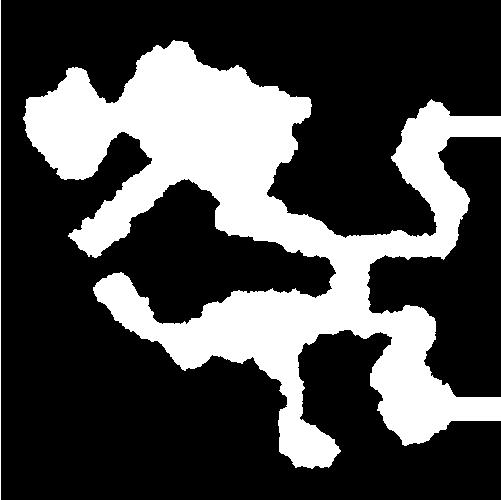
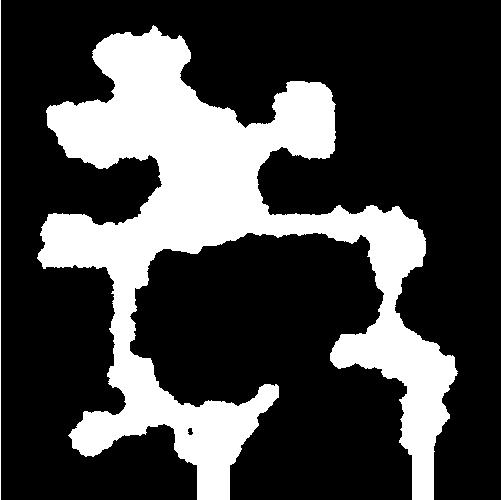
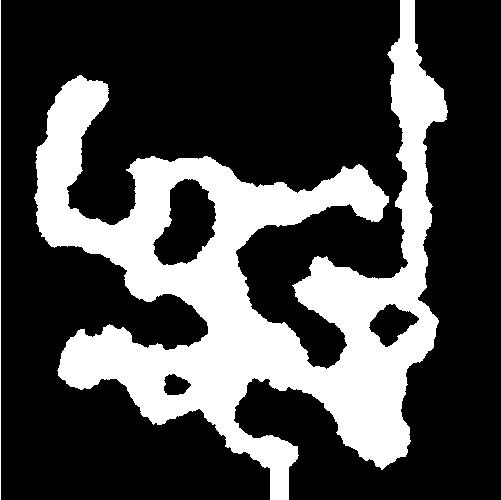
We created 20 artificial maps based on Random Dungeon Generator. Each map is composed of 500 by 500 nodes. Because of the shape, we named them as Cave. The thumbnails for 20 maps are as follows.
 |
 |
 |
 |
 |
| Cave 01 | Cave 02 | Cave 03 | Cave 04 | Cave 05 |
 |
 |
 |
 |
 |
| Cave 06 | Cave 07 | Cave 08 | Cave 09 | Cave 10 |
 |
 |
 |
 |
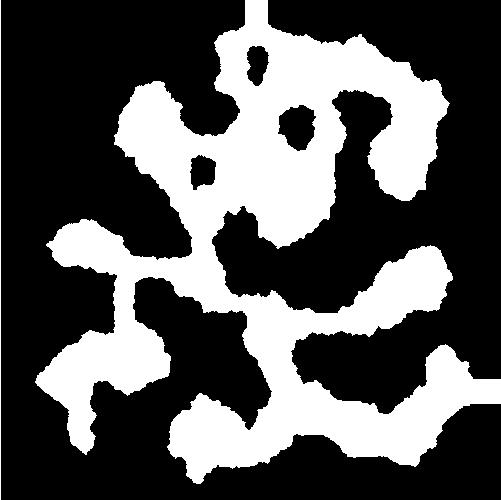 |
| Cave 11 | Cave 12 | Cave 13 | Cave 14 | Cave 15 |
 |
 |
 |
 |
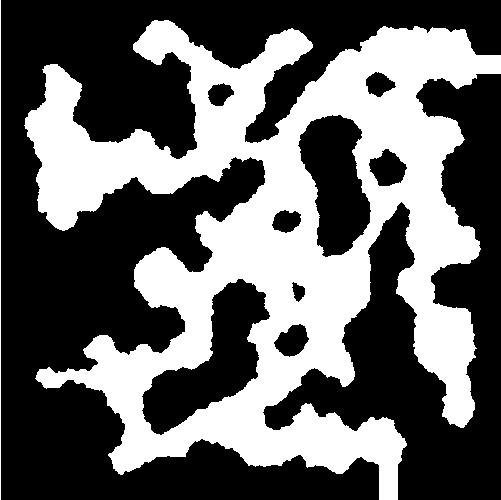 |
| Cave 16 | Cave 17 | Cave 18 | Cave 19 | Cave 20 |
For Caves map set, we provide CSV version of .mat file. In CSV version, each map is delivered by text-plain files. Specific information for the format is:
First Line: the position of starting node (Not index)
Second Line: the position of destination node
Others : 0/1 values indicating obstacle node and free-space node.
If you want to download CSV version of 20 maps, please click this hyperlink [Download].
Triumph, Pisa, Tokyo, and Vatican – 4 Real-World Maps
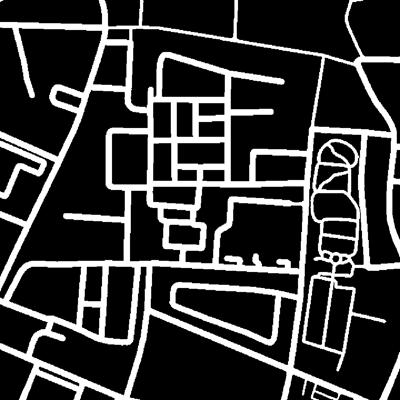
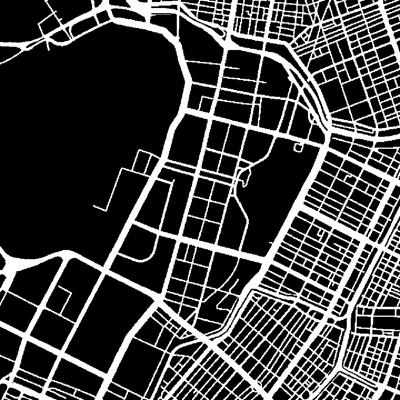
We created 4 real-world maps based on Google Maps service. These maps are obtained by finger-printing the image given by Google Map service after eliminating unnecessary objects and color information. Each map has 4 variations with different number of nodes; 1000 by 1000, 2000 by 2000, 3000 by 3000, and 4000 by 4000.
 |
 |
 |
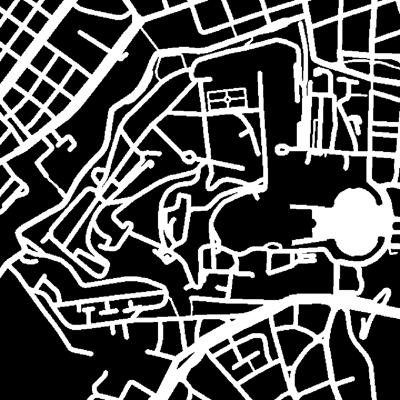 |
| Triumph | Pisa | Tokyo | Vatican |
You can find the original map image by following these hyperlinks: [Triumph], [Pisa], [Tokyo], and [Vatican]
Downloads
| Caves (including JPG thumbnails) | [Download] |
| Triumph | [Download] |
| Pisa | [Download] |
| Tokyo | [Download] |
| Vatican | [Download] |